Search Intent: Informational — NFL fans looking for the matchup result, player performances, box score, team statistics, and game analysis.
Article focus: The December 28, 2025, regular-season matchup between the Philadelphia Eagles and Buffalo Bills, the latest completed meeting identified in the available records.
Eagles vs Bills: Match Overview
The Philadelphia Eagles vs Buffalo Bills delivered a dramatic finish when they met on December 28, 2025, at Highmark Stadium in Orchard Park, New York. Philadelphia came away with a narrow 13–12 victory after building an early lead and surviving a late Buffalo comeback.
The game was a defensive battle rather than the high-scoring contest many fans expected. Philadelphia scored 13 unanswered points across the first two quarters, while Buffalo struggled to find the end zone until the fourth quarter.
The Bills made the final period interesting with two rushing touchdowns from quarterback Josh Allen. However, failed extra-point and two-point conversion attempts prevented Buffalo from completing the comeback.
For Philadelphia, the victory demonstrated the value of defensive pressure, disciplined execution, and taking advantage of early scoring opportunities. Buffalo produced more total yards and first downs but could not turn that advantage into enough points.
According to the published box score, Philadelphia finished with 190 total yards, while Buffalo recorded 331. Despite that difference, the Eagles protected their lead and secured the one-point win. The Football Database+1
Final: Eagles 13 – Bills 12
1. Final Score and Quarter-by-Quarter Results
The scoreboard tells the story of a game that changed dramatically in the final quarter.
| Quarter | Philadelphia Eagles | Buffalo Bills |
|---|---|---|
| First | 7 | 0 |
| Second | 6 | 0 |
| Third | 0 | 0 |
| Fourth | 0 | 12 |
| Final | 13 | 12 |
Philadelphia scored its only touchdown in the first quarter when Jalen Hurts connected with tight end Dallas Goedert on a one-yard pass.
Kicker Jake Elliott added two field goals in the second quarter, one from 47 yards and another from 28 yards. Those kicks gave Philadelphia a 13–0 halftime advantage.
Buffalo finally responded in the fourth quarter. Josh Allen rushed for a two-yard touchdown, but the extra-point kick was unsuccessful. Later, Allen scored again on a one-yard rushing touchdown. Buffalo attempted a two-point conversion but failed.
The Bills finished just one point behind, making the closing minutes especially dramatic. The Football Database+1
2. Eagles vs Bills Match Player Stats: Quarterback Comparison
The quarterback matchup featured Jalen Hurts for Philadelphia and Josh Allen for Buffalo.
Both quarterbacks had different responsibilities during the game. Hurts helped Philadelphia establish an early advantage, while Allen carried much of Buffalo’s offensive workload during the comeback attempt.
| Passing statistics | Jalen Hurts | Josh Allen |
|---|---|---|
| Team | Eagles | Bills |
| Completions | 13 | 23 |
| Attempts | 27 | 35 |
| Completion percentage | 48.1% | 65.7% |
| Passing yards | 110 | 262 |
| Passing touchdowns | 1 | 0 |
| Interceptions | 0 | 0 |
| Sacks taken | 1 | 5 |
| Passing rating | 71.5 | 88.0 |
Source: Pro-Football-Reference game box score. Pro Football Reference
Jalen Hurts: Efficient when it mattered
Hurts completed 13 of 27 passes for 110 yards and one touchdown. Although his passing yardage was limited, he avoided interceptions and delivered the game’s opening touchdown.
His most important passing play came early in the first quarter. He connected with Goedert for a one-yard touchdown that put Philadelphia ahead 7–0.
Hurts also contributed as a runner, recording three rushing attempts for five yards. His rushing production was modest, but his ability to manage the offense and avoid costly mistakes helped the Eagles protect their advantage.
Philadelphia did not need a huge passing performance to win. Instead, the team relied on its defense, field-position management, and Elliott’s accurate kicking.
Josh Allen: Strong passing numbers but a frustrating finish
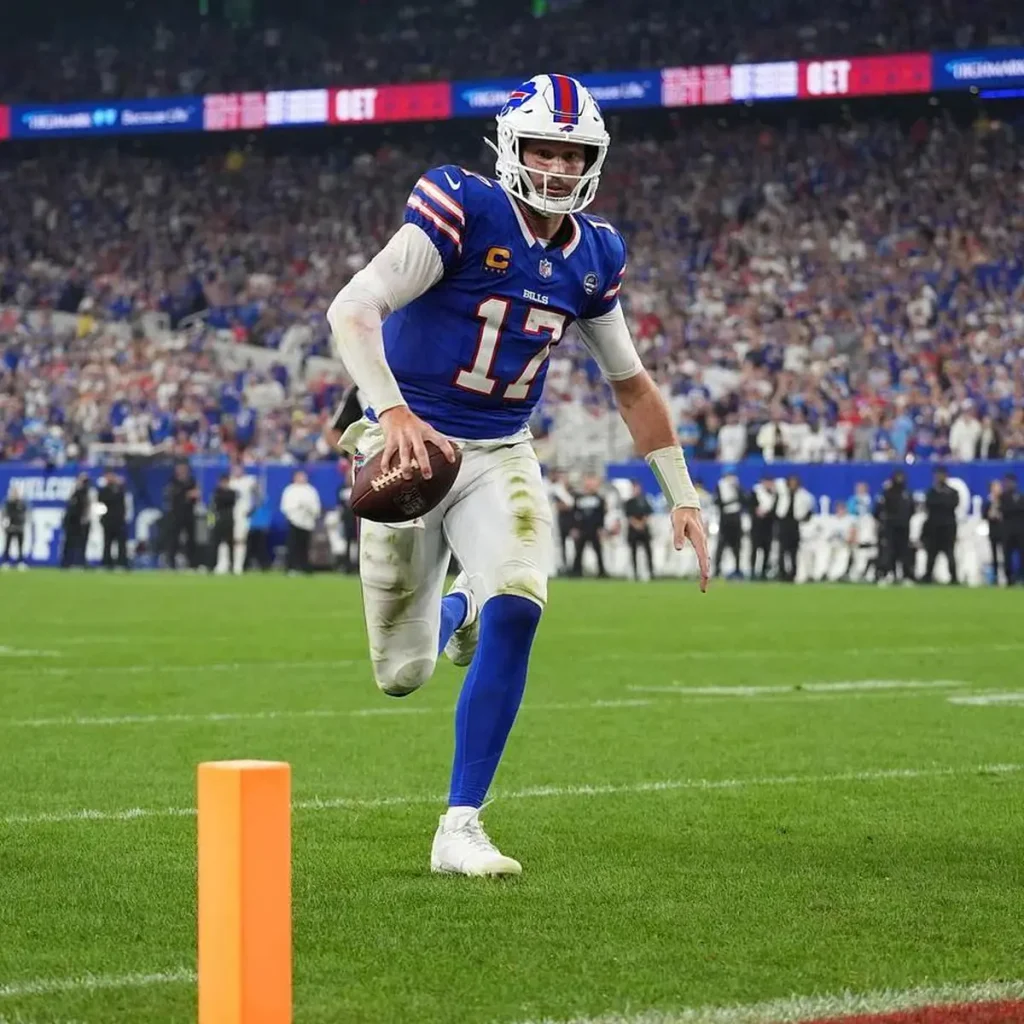
Allen completed 23 of 35 passes for 262 yards. He did not throw a touchdown or an interception, but he contributed two rushing touchdowns.
His passing performance was productive in terms of yardage and completion percentage. However, the Eagles’ defensive pressure made it difficult for him to operate consistently.
Allen was sacked five times, losing 51 yards. Those sacks affected Buffalo’s offensive rhythm and made several drives more challenging.
His fourth-quarter rushing touchdowns gave the Bills a realistic chance to win. Unfortunately, the unsuccessful conversion attempts meant his late-game production was not enough.
The quarterback comparison shows an interesting contrast: Allen produced significantly more passing yards, but Hurts and the Eagles made better use of their scoring opportunities.
3. Rushing Stats: Saquon Barkley and James Cook Lead Their Teams
The rushing battle featured two important offensive players: Saquon Barkley for Philadelphia and James Cook for Buffalo.
Both running backs contributed to their respective offenses, although Buffalo gained more total rushing yards.
| Rushing player | Team | Attempts | Yards | Average | TD |
|---|---|---|---|---|---|
| James Cook | Bills | 20 | 74 | 3.7 | 0 |
| Saquon Barkley | Eagles | 19 | 68 | 3.6 | 0 |
| Josh Allen | Bills | 7 | 27 | 3.9 | 2 |
| Ty Johnson | Bills | 5 | 15 | 3.0 | 0 |
| Ray Davis | Bills | 1 | 4 | 4.0 | 0 |
| Tank Bigsby | Eagles | 2 | 7 | 3.5 | 0 |
| Jalen Hurts | Eagles | 3 | 5 | 1.7 | 0 |
| Will Shipley | Eagles | 2 | 2 | 1.0 | 0 |
Source: Published player box score. Pro Football Reference
Saquon Barkley: Philadelphia’s leading rusher
Barkley carried the football 19 times for 68 yards, averaging 3.6 yards per attempt.
He did not score a rushing touchdown, but his workload was important to Philadelphia’s offensive approach. The Eagles used him to keep the offense balanced and help control the game.
Barkley’s presence also gave Hurts another option when the passing game was not producing explosive plays. His ability to handle a significant number of carries helped Philadelphia avoid becoming overly predictable.
James Cook: Buffalo’s ground-game leader
Cook recorded 74 rushing yards on 20 carries, making him the leading rusher in the game.
He averaged 3.7 yards per attempt and gave Buffalo a reliable option in the backfield. His workload showed that the Bills continued to trust their running game even while trying to overcome the early deficit.
However, Cook did not score a rushing touchdown. Buffalo’s two rushing scores came from Allen, whose ability to run near the goal line helped the team get back into the contest.
Josh Allen’s rushing contribution
Allen rushed seven times for 27 yards and scored twice.
His two touchdowns were Buffalo’s only touchdowns of the afternoon. Both came from short-yardage situations in the fourth quarter.
The quarterback’s rushing ability remains a major part of Buffalo’s offensive identity. When passing opportunities become limited, Allen can create scoring chances with his legs.
4. Receiving Stats: Brandin Cooks and Dallas Goedert Make Their Mark
The receiving numbers reveal another important difference between the teams.
Buffalo generated more passing yardage, with Brandin Cooks delivering the biggest individual receiving performance. Philadelphia relied on Goedert’s touchdown and contributions from its supporting receivers.
| Receiving player | Team | Receptions | Yards | Average per catch | TD |
|---|---|---|---|---|---|
| Brandin Cooks | Bills | 4 | 101 | 25.3 | 0 |
| Ty Johnson | Bills | 3 | 33 | 11.0 | 0 |
| Ray Davis | Bills | 1 | 12 | 12.0 | 0 |
| James Cook | Bills | 1 | 3 | 3.0 | 0 |
| Dallas Goedert | Eagles | 1 |
The available box-score extract confirms the listed Buffalo receiving totals and Goedert’s touchdown, but does not provide a complete Eagles receiving table. Pro Football Reference+1
Brandin Cooks: Buffalo’s explosive receiving option
Brandin Cooks was Buffalo’s leading receiver with four catches for 101 yards.
His average of 25.3 yards per reception demonstrated how much explosive value he brought to the passing game. He gave Allen a deep-field target and helped Buffalo move the ball through the air.
Cooks’ 101-yard performance was especially notable because the Bills finished with 262 passing yards overall.
Despite his production, Buffalo could not turn those receiving yards into a passing touchdown.
Dallas Goedert: The Eagles’ early scoring hero
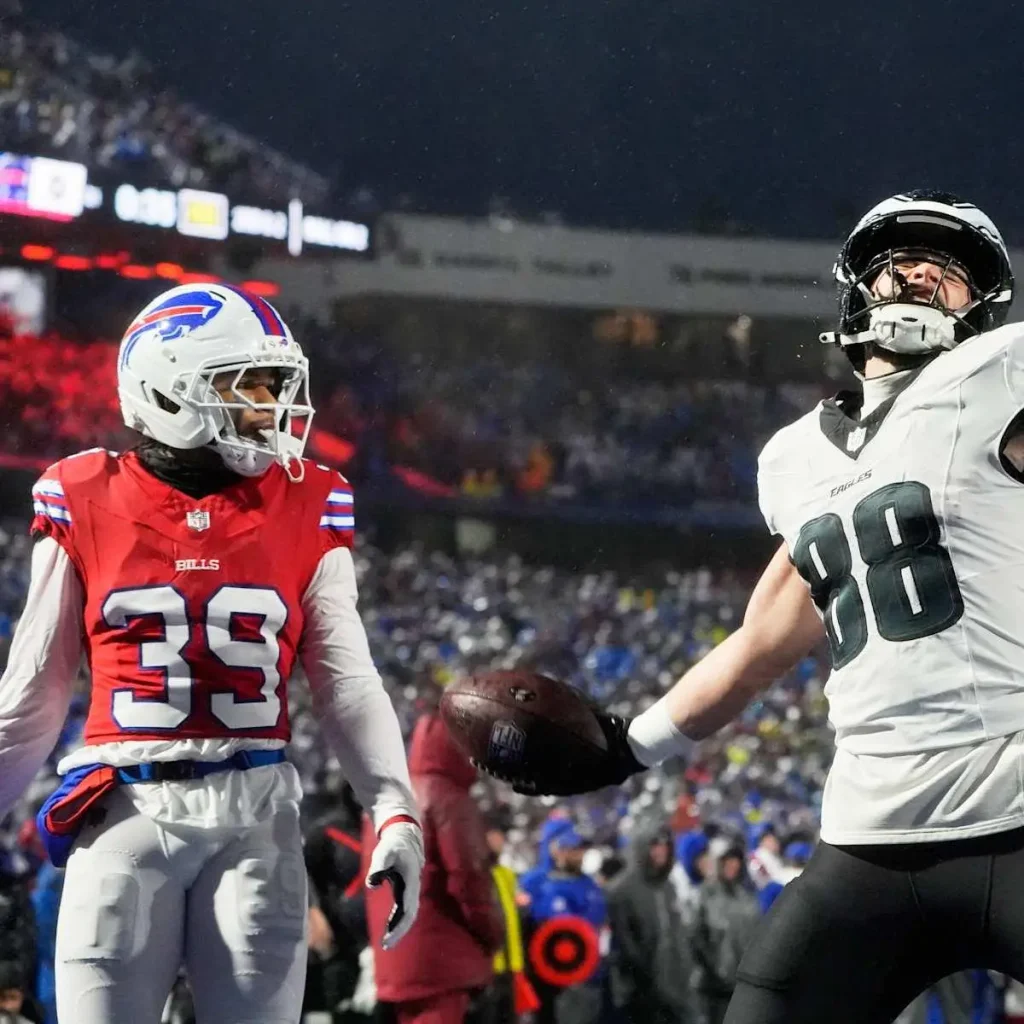
Goedert caught the touchdown pass that opened the scoring.
The one-yard connection with Hurts gave Philadelphia an early 7–0 lead. That touchdown became especially important because the Eagles did not score again after the second quarter.
Goedert’s role as a tight end is valuable in short-yardage situations. His ability to find space near the goal line provided Philadelphia with an effective scoring option.
Ty Johnson and Ray Davis
Johnson recorded three receptions for 33 yards, while Davis caught one pass for 12 yards.
Their contributions helped Buffalo create additional passing options beyond its primary receivers. However, the Bills needed more successful red-zone execution to turn their yardage advantage into points.
5. Team Statistics: Eagles vs Bills Comparison
One of the most interesting aspects of this game was the difference between total production and the final result.
Buffalo led in several major offensive categories but still lost. Philadelphia’s ability to protect its early lead made the difference.
| Team statistics | Eagles | Bills |
|---|---|---|
| Total net yards | 190 | 331 |
| Passing yards | 108 | 211 |
| Rushing yards | 82 | 120 |
| First downs | 11 | 20 |
| Passing first downs | 6 | 11 |
| Rushing first downs | 4 | 7 |
| Third-down conversions | 3/13 | 6/15 |
| Total plays | 54 | 73 |
| Turnovers | 0 | 1 |
| Time of possession | 24:45 | 35:15 |
| Sacks allowed | 1 | 5 |
Source: Published game box score. The Football Database+1
Total offensive yards
Buffalo recorded 331 total yards, compared with Philadelphia’s 190.
The Bills gained 141 more yards, demonstrating that they were able to move the ball more frequently.
However, yardage does not automatically produce victories. Teams must convert opportunities into touchdowns and field goals.
Philadelphia did a better job of turning its scoring opportunities into points.
First downs
Buffalo recorded 20 first downs, while Philadelphia finished with 11.
This difference reflects Buffalo’s greater offensive activity. The Bills were able to extend drives and maintain possession.
However, their inability to finish drives with successful scoring attempts prevented that advantage from translating into a win.
Third-down efficiency
Philadelphia converted three of 13 third-down attempts, while Buffalo converted six of 15.
Neither team was particularly efficient, but Buffalo had more successful conversions.
The Eagles compensated through their early scoring and defensive performance.
Time of possession
Buffalo controlled the football for 35 minutes and 15 seconds. Philadelphia possessed it for 24 minutes and 45 seconds.
The Bills had the ball for more than ten additional minutes, but the Eagles’ defense continued to make important stops.
This is a good example of why possession statistics should always be considered alongside scoring efficiency and turnovers.
Turnovers
Philadelphia finished without a turnover. Buffalo recorded one lost fumble.
That difference mattered because every additional possession can become valuable in a close NFL game.
The Eagles protected the ball and avoided giving Buffalo unnecessary opportunities.
6. Defensive Performance: How Philadelphia Protected Its Lead
The defensive battle was one of the most important parts of this matchup. Although Buffalo gained more yards and recorded more first downs, Philadelphia’s defense made several important plays that helped preserve the lead.
Philadelphia’s pass rush
The Eagles recorded five sacks against Allen, while Buffalo managed only one sack against Hurts.
The five sacks resulted in 51 yards lost for Buffalo. This put additional pressure on Allen and made it harder for the Bills to maintain their offensive rhythm.
Getting consistent pressure on a quarterback is especially important against a player like Allen, who can extend plays and create opportunities outside the pocket.
Philadelphia’s defensive front did an effective job of limiting his time to make decisions.
Buffalo’s defensive effort
Buffalo’s defense also had some positive moments. The Bills limited Philadelphia to 190 total yards and prevented the Eagles from scoring after halftime.
However, the early 13-point deficit became difficult to overcome.
The Bills needed to create more scoring opportunities before the fourth quarter. Their defense kept the game within reach, but the offense could not finish enough drives.
The importance of red-zone defense
The final score demonstrates how important red-zone execution can be.
Philadelphia scored one touchdown and added two field goals. Buffalo scored two rushing touchdowns but failed to complete either scoring opportunity with the additional points needed to take the lead.
In close games, successful extra points and two-point conversions can make the difference between a win and a loss.
7. Biggest Turning Points of the Game
Several moments shaped the result and influenced the final outcome.
Eagles Fans Get Crushing Dallas Goedert Update
First quarter: Goedert’s touchdown
Hurts found Goedert for a one-yard touchdown. Philadelphia took a 7–0 lead and established early control.
Philadelphia Eagles v Buffalo Bills – NFL 2025
Second quarter: Elliott extends the lead
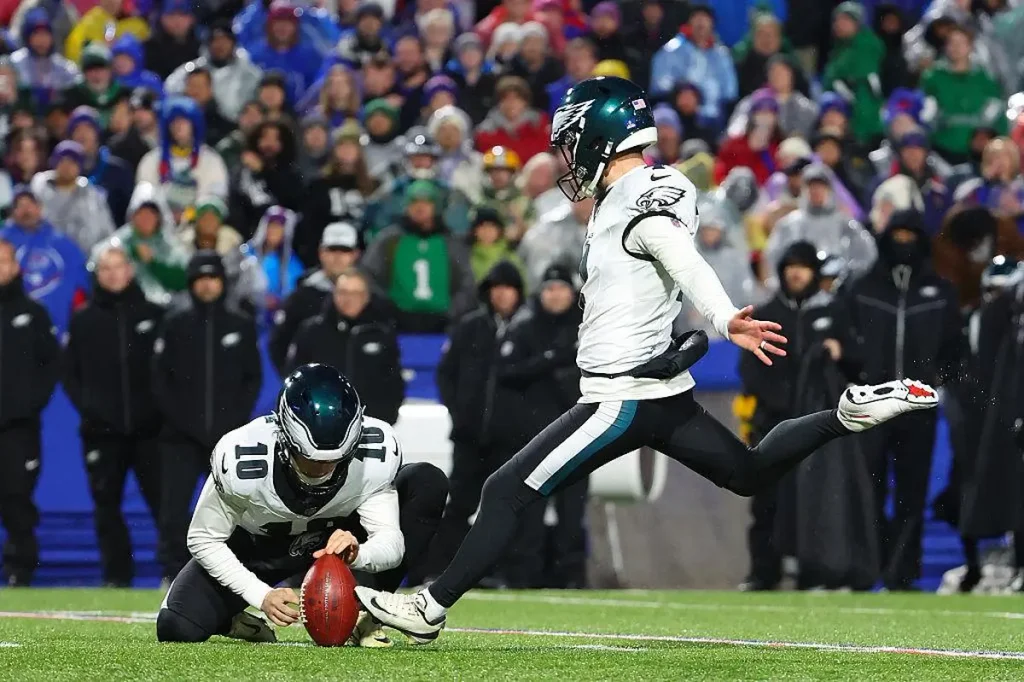
Two successful field goals increased Philadelphia’s advantage to 13–0 before halftime.
‘He’s just a freak of nature’: Allen dazzles with Bills playoff-record 52-yard TD run
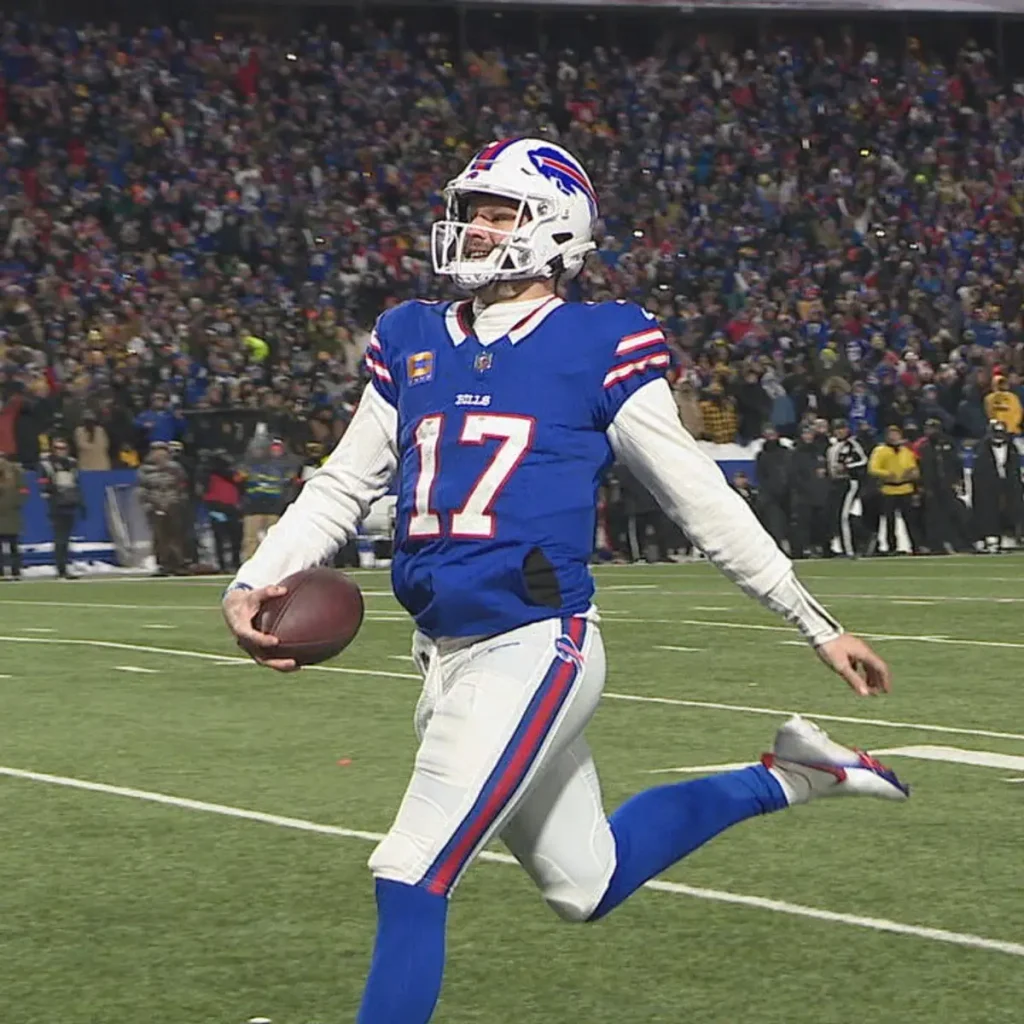
Fourth quarter: Allen starts the comeback
Allen scored on a two-yard rushing play, but Buffalo missed the extra point.
Joe Brady, Josh Allen Focus on Correcting Buffalo Bills’ Biggest Week 2 Mistake – Yahoo Sports
Final seconds: The comeback falls short
Allen scored again from one yard out. Buffalo failed its two-point attempt, leaving the Bills one point behind.
Why the missed conversions mattered
The Bills’ late scoring effort was impressive, but the missed conversions changed the outcome.
After the first touchdown, Buffalo could have added an extra point to make the score 13–7. Instead, the score remained 13–6.
The second touchdown brought Buffalo to 13–12. A successful two-point conversion would have given the Bills a 14–13 lead.
Neither opportunity was converted.
Those small details ultimately decided a game separated by a single point.
8. Eagles vs Bills: What Went Right for Philadelphia?
Philadelphia’s victory came from several important areas of execution.
1. Early scoring advantage
The Eagles established a 13–0 lead before halftime. That gave the defense room to play aggressively and forced Buffalo to chase the game.
2. Ball security
Philadelphia did not commit a turnover. Avoiding mistakes was particularly valuable in a game where scoring opportunities were limited.
3. Defensive pressure
The five sacks against Allen disrupted Buffalo’s passing attack and created difficult situations.
4. Reliable kicking
Jake Elliott converted both field-goal attempts, from 47 and 28 yards. Those six points proved essential in the one-point victory.
5. Strong goal-line execution
The connection between Hurts and Goedert produced the game’s opening touchdown. Philadelphia took advantage of an important early opportunity.
The Eagles did not dominate every statistical category, but they performed well in the areas that mattered most to the final result.
9. What Went Wrong for Buffalo?
Buffalo’s loss was frustrating because the team produced more total yards, first downs, and time of possession.
Several issues prevented the Bills from completing the comeback.
1. Slow offensive start
Buffalo did not score in the first three quarters. Falling behind 13–0 created unnecessary pressure.
2. Too many sacks
Five sacks resulted in 51 lost passing yards. That affected Allen’s ability to keep drives alive.
3. Missed scoring opportunities
The failed extra-point and two-point attempts were decisive. Buffalo needed just one successful conversion to change the result.
4. Lost fumble
The Bills lost one fumble, giving Philadelphia an additional advantage in ball security.
5. Incomplete comeback
Allen’s two rushing touchdowns brought Buffalo close, but the offense could not finish the job.
The biggest lesson for Buffalo was that offensive production must be converted into points. Gaining 331 yards is encouraging, but it does not guarantee a win.
10. Fantasy Football Takeaways
This matchup also offered several useful observations for fantasy football managers.
| Player | Performance | Fantasy takeaway |
|---|---|---|
| Josh Allen | 262 passing yards, 27 rushing yards, 2 rushing TDs | Valuable rushing touchdown production |
| Jalen Hurts | 110 passing yards, 1 passing TD | Modest passing output |
| Saquon Barkley | 68 rushing yards | Significant rushing workload |
| James Cook | 74 rushing yards | Led both teams in rushing |
| Brandin Cooks | 101 receiving yards | Explosive receiving production |
| Dallas Goedert | 1 receiving TD | Valuable red-zone involvement |
Player statistics from the December 28, 2025, box score. Pro Football Reference
Josh Allen: His two rushing touchdowns were especially valuable in fantasy formats that reward rushing scores. His 262 passing yards also provided a solid statistical foundation.
Jalen Hurts: Hurts had a relatively quiet passing performance, but his touchdown connection with Goedert contributed to Philadelphia’s win.
James Cook: Cook’s 74 rushing yards demonstrated a substantial workload. He was Buffalo’s leading rusher.
Saquon Barkley: Barkley recorded 68 rushing yards on 19 carries. His volume made him an important part of Philadelphia’s offensive strategy.
Brandin Cooks: His four catches for 101 yards were a major positive for fantasy managers. His ability to generate significant yardage on each reception was particularly valuable.
Dallas Goedert: Goedert’s touchdown demonstrated his potential value in scoring situations.
Fantasy managers should consider more than one game when evaluating players. Usage, health, offensive role, and upcoming opponents all influence future fantasy production.
11. What This Result Means for Both Teams
The result offered different lessons for Philadelphia and Buffalo.
For the Eagles, the victory showed that a team does not need to win every statistical category to secure an important road victory. Strong defensive execution, successful kicking, and avoiding turnovers can be enough.
Philadelphia also demonstrated the importance of building an early lead. The team’s first-half production gave it a cushion that proved difficult for Buffalo to overcome.
For the Bills, the game highlighted the importance of starting faster and improving red-zone execution. Allen’s late rushing production showed that Buffalo could create opportunities, but the offense needed to be more consistent throughout the game.
The matchup also reinforced the competitive nature of the NFL. Even when one team appears to control the statistical categories, the final score can depend on a handful of important plays.
12. Historical Rivalry Between the Eagles and Bills
The Philadelphia Eagles and Buffalo Bills represent two different NFL divisions.
Philadelphia competes in the NFC East, alongside the Dallas Cowboys, New York Giants, and Washington Commanders.
Buffalo competes in the AFC East, alongside the Miami Dolphins, New England Patriots, and New York Jets.
Because they belong to different conferences, their regular-season meetings are less frequent than divisional matchups.
However, the teams have developed an interesting competitive history. Their 2023 meeting was particularly memorable.
On November 26, 2023, Philadelphia defeated Buffalo 37–34 in overtime at Lincoln Financial Field.
Jalen Hurts delivered a five-touchdown performance, including the game-winning 12-yard rushing touchdown in overtime. DeVonta Smith recorded seven catches for 106 yards and a touchdown. Buffalo Bills at Philadelphia Eagles
The 2025 meeting was very different. Instead of an offensive shootout, fans witnessed a defensive contest with a dramatic fourth-quarter finish.
These contrasting games demonstrate why the matchup attracts attention from NFL fans.
13. Frequently Asked Questions (FAQs)
1. Who won the Eagles vs Bills game?
The Philadelphia Eagles defeated the Buffalo Bills 13–12 on December 28, 2025, at Highmark Stadium in Orchard Park, New York.
2. What was the final score?
Philadelphia scored 13 points, while Buffalo finished with 12. The Eagles maintained their lead despite a late fourth-quarter comeback attempt by the Bills.
3. How did Josh Allen perform?
Josh Allen completed 23 of 35 passes for 262 yards. He threw no passing touchdowns or interceptions but scored two rushing touchdowns.
4. How many passing yards did Jalen Hurts have?
Hurts recorded 110 passing yards, completing 13 of 27 attempts. He threw one touchdown pass to Dallas Goedert and did not throw an interception.
5. Who was the leading rusher?
James Cook led all players with 74 rushing yards on 20 attempts. Saquon Barkley followed with 68 yards on 19 carries.
6. Who led the game in receiving yards?
Brandin Cooks led all receivers with 101 yards on four receptions for Buffalo.
7. How many touchdowns did Buffalo score?
Buffalo scored two touchdowns, both through Josh Allen’s rushing plays in the fourth quarter.
8. How many sacks did the Eagles record?
Philadelphia recorded five sacks against Josh Allen, resulting in 51 yards lost for Buffalo.
9. Why did the Bills lose despite gaining more yards?
Buffalo gained 331 total yards compared with Philadelphia’s 190, but failed to score in the first three quarters. Missed conversion attempts after both fourth-quarter touchdowns also prevented the Bills from taking the lead.
10. Where was the game played?
The game took place at Highmark Stadium in Orchard Park, New York, the home stadium of the Buffalo Bills.
11. When did the Eagles and Bills last meet?
Their latest completed meeting identified in the available records took place on December 28, 2025. Philadelphia won 13–12.
12. Where can fans find the complete box score?
Fans can check the following sources for detailed player statistics, scoring summaries, and team comparisons:
- Pro-Football-Reference full box score
- Football Database game statistics
- Official Philadelphia Eagles website
- Official Buffalo Bills website
14. Final Thoughts
The December 28, 2025, meeting between Philadelphia and Buffalo was a reminder that NFL games are not always decided by total yards or offensive production.
Philadelphia secured a 13–12 victory by building an early lead, protecting the football, applying pressure to Josh Allen, and making its field-goal opportunities count.
Buffalo had several impressive individual performances. Allen threw for 262 yards and scored twice on the ground, James Cook rushed for 74 yards, and Brandin Cooks recorded 101 receiving yards.
For Philadelphia, Jalen Hurts connected with Dallas Goedert for the opening touchdown, Saquon Barkley contributed 68 rushing yards, and Jake Elliott converted two important field goals.
The biggest difference was execution in crucial moments. Buffalo had more yards, first downs, and possession time, but Philadelphia made better use of its scoring opportunities.
For anyone researching eagles vs bills, this matchup provides an excellent example of how defensive pressure, special teams, and late-game decisions can determine an NFL result.
The one-point victory was a memorable result for Philadelphia and a frustrating near-comeback for Buffalo.
SEO Publishing Details
| SEO element | Recommended content |
|---|---|
| Primary keyword | eagles vs bills |
| Content category | NFL / Football |
| Article type | Game recap and analysis |
| Audience | United States |
| Search intent | Informational |
| URL slug | /eagles-vs-bills/ |
| Image alt text | Eagles vs Bills NFL game recap and player highlights |
| Suggested schema | Article, SportsEvent (for an actual event page) |
Suggested internal links:
- Philadelphia Eagles player statistics
- Buffalo Bills player statistics
- Josh Allen career stats
- Jalen Hurts game performances
- NFL game recaps and weekly results
- Philadelphia Eagles season schedule
- Buffalo Bills season schedule
Editorial recommendation: Keep the December 28, 2025, date clearly visible so readers do not mistake this historical game recap for a live or upcoming matchup. Verify any future meeting’s schedule and statistics before updating the article.
1 thought on “Eagles vs Bills: Game Recap, Final Score, Player Stats”