The phrase salty meaning slang refers to the informal use of salty to describe someone who feels annoyed, bitter, resentful, or upset about something. In American English, if a friend loses a video game and starts complaining, you might say, “Why are you so salty?” You’re suggesting that they’re taking the loss personally or struggling to hide their frustration.
However, salty doesn’t always describe anger. It can also suggest jealousy, disappointment, or irritation when someone feels they have been treated unfairly. For example, a person might act salty after being left out of a party or losing a competition they expected to win.
The word originally describes something that tastes of salt. Its slang meaning developed through figurative language and became especially popular in gaming communities, online conversations, memes, and social media.
In this guide, you’ll learn what the expression means, where it came from, how to use it in sentences, and how it differs from similar words such as bitter, jealous, and butthurt. You’ll also find practical examples, grammar tips, common mistakes, and answers to frequently asked questions.
Quick Answer
Salty is an informal slang word that means annoyed, bitter, resentful, or upset, especially after losing, being criticized, or feeling unfairly treated. For example, “He’s salty because he lost the game” means he’s frustrated about losing and may be showing that frustration through his words or behavior. The expression can be playful or insulting, depending on the context and tone.
What Does Salty Mean in Slang?
In slang, salty describes a person who is visibly annoyed, disappointed, resentful, or irritated about something. It often suggests that the person is holding on to negative feelings instead of letting the situation go.
Imagine two friends playing a video game. One wins, and the other keeps arguing about the rules. The winner might laugh and say, “You’re just salty because I beat you.”
In this situation, salty means the losing friend is upset about the result. The comment might be friendly teasing, but it could sound rude if the argument is serious.
People also use the word when someone reacts negatively to rejection, criticism, jealousy, or disappointment.
| Situation | What salty means | Example |
|---|---|---|
| Losing a game | Frustrated about losing | “He’s salty about the final score.” |
| Receiving criticism | Annoyed by negative feedback | “She got salty when I corrected her.” |
| Feeling excluded | Resentful about being left out | “He’s salty that we didn’t invite him.” |
| Romantic disappointment | Upset about rejection or a breakup | “She’s still salty about her ex.” |
| Online arguments | Irritated or bitter during a disagreement | “The comments are getting salty.” |
| Workplace competition | Resentful about someone else’s success | “He seems salty about her promotion.” |
The common thread is a negative emotional reaction. However, the word doesn’t necessarily mean someone is furious. A salty person might simply be sulking, making sarcastic remarks, or acting noticeably irritated.
Is Salty a Bad Word?
No. Salty isn’t a swear word or inherently offensive term. It’s informal slang, and people often use it playfully among friends.
For example, “Don’t be salty. We’ll play another round” is a lighthearted way to tell someone not to get upset about losing.
Still, the word can sound dismissive. If someone has a legitimate reason to feel hurt or frustrated, calling them salty might make them feel that you’re ignoring their concerns.
The relationship between the speakers, the situation, and the tone of voice all affect how the word comes across.
Where Did the Slang Word Salty Come From?
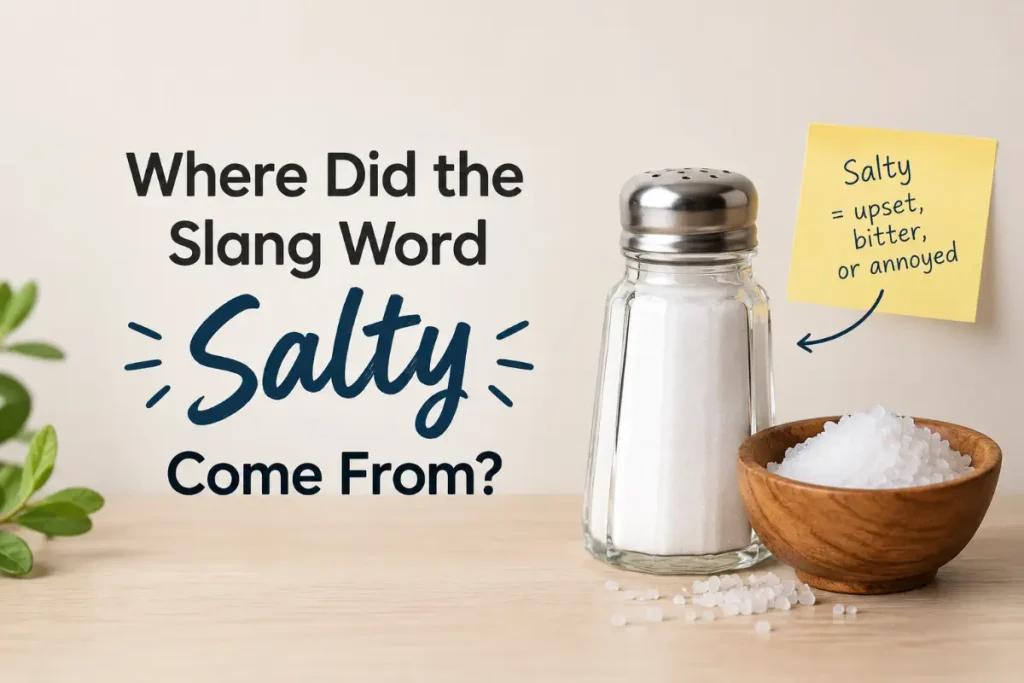
The word salty originally described something containing or tasting of salt. Its connection to emotions developed through figurative language, although the precise history of its modern slang use is complex.
English speakers have used salty in figurative ways for a long time. The word has appeared in expressions connected with sharpness, irritation, and resentment. Over time, it became a way to describe someone who was visibly annoyed or in a bad mood.
The expression gained wider recognition in American slang, including through gaming communities, hip hop culture, online forums, and social media. Today, people frequently use it in memes, comment sections, and casual conversations.
For more background, see Dictionary.com’s definition and usage of salty, which covers the word’s standard meanings and its informal use.
Why Do People Say Salty Instead of Angry?
The word angry describes a broad emotional state. Salty usually adds a little more meaning: the person may be annoyed about a specific event and may be showing resentment, bitterness, or sore-loser behavior.
Compare these examples:
- Angry: “He’s angry about the decision.”
- Salty: “He’s salty because the referee ruled against his team.”
The first sentence simply states an emotion. The second suggests that the person is still bothered by a particular result.
The slang can also make a complaint sound less serious. Friends might call someone salty to tease them rather than accuse them of being genuinely hostile.
What Does Salty Mean on TikTok and Social Media?
On TikTok, Instagram, YouTube, and other social platforms, salty usually describes someone who seems upset, jealous, bitter, or unable to accept a situation gracefully.
You might see the word in comments under gaming clips, reaction videos, relationship posts, or competitive challenges.
For example, a gamer might lose a match and post an angry response. Someone in the comments could write, “Bro is salty.” This means the gamer appears frustrated about losing.
Here are several common online uses.
- “Stay salty” means keep being annoyed, often as a sarcastic taunt.
- “So salty” emphasizes how upset or resentful someone seems.
- “Salty tears” jokingly refers to the frustration of someone who has lost or been proven wrong.
- “Salty comments” describes remarks that sound bitter, hostile, or resentful.
- “Why you salty?” asks why someone is acting annoyed or taking something personally.
- “Salty about it” means continuing to feel upset about a particular situation.
What Does Stay Salty Mean?
Stay salty is usually a sarcastic or teasing expression. It suggests that someone can keep being upset while the speaker remains unconcerned.
For example:
Person A: “Your team only won because we had an injured player.”
Person B is suggesting that Person A is making excuses because they dislike the result.
The phrase can be funny among friends, but it can also escalate an argument. In a serious disagreement, it may sound dismissive or provoke the other person.
What Does Salty Mean in Gaming?
Gaming is one of the most familiar settings for this slang. Players use it to describe opponents or teammates who react badly to losing, make excuses, complain about game mechanics, or blame others for mistakes.
Examples include:
- “He’s salty because I beat him.”
- “That was a salty reaction to a fair loss.”
- “The chat got salty after the final round.”
- “Don’t get salty. It’s only a game.”
In gaming culture, the word often overlaps with the idea of being a sore loser. However, it can also describe someone who is irritated by unfair play, cheating, or frustrating game design.
Context matters because a complaint isn’t automatically unreasonable just because the person making it is upset.
How to Use Salty in a Sentence
The word usually functions as an adjective. It describes a person’s mood, attitude, remarks, or reaction to an event.
Here are practical examples from everyday American English.
1. Talking About Losing
- “He’s salty because he lost the tournament.”
- “Don’t be salty about one bad game.”
- “She got salty after losing the final round.”
These examples describe frustration connected with a disappointing result.
2. Talking About Jealousy
- “He’s salty that his friend got the promotion.”
- “She seems salty about their new relationship.”
- “Don’t get salty just because someone else succeeded.”
Here, salty suggests resentment or jealousy. However, it doesn’t prove that the person is jealous; it describes how their behavior appears to others.
3. Talking About Rejection
- “He’s still salty about being rejected.”
- “She got salty when her crush started dating someone else.”
- “My friend was salty that he didn’t get invited.”
These sentences describe disappointment that has turned into visible irritation or resentment.
4. Talking About Arguments
- “Why are you getting so salty?”
- “His reply sounded pretty salty.”
- “The conversation became salty after the disagreement.”
In these examples, the word describes a person’s tone or reaction rather than the original cause of the argument.
5. Using Salty in Text Messages
Consider this conversation:
Friend: “They picked Alex for the team instead of me.”
You: “Are you salty about it?”
The question asks if your friend feels annoyed or resentful about the decision. Depending on your relationship, it could sound caring, curious, or teasing.
A softer alternative is “Are you disappointed about it?” This wording is more suitable if the situation is sensitive.
6. Using Salty in Social Media Captions
People sometimes use the word in humorous captions about competition, friendships, and everyday disagreements.
Examples include:
- “Too salty to admit I lost.”
- “The scoreboard speaks for itself.”
- “Serving salty reactions one game at a time.”
- “A little competition, a lot of salty comments.”
- “Winning is sweet. The replies are salty.”
These captions work best when the situation is lighthearted. Avoid using them to mock someone who’s genuinely struggling or dealing with a serious disappointment.
Salty vs. Bitter vs. Jealous vs. Angry
These words describe related feelings, but they aren’t exact synonyms. Understanding their differences helps you choose the right word.
| Word | Main meaning | Example |
|---|---|---|
| Salty | Annoyed or resentful about a specific situation | “He’s salty about losing.” |
| Bitter | Holding on to deep resentment or disappointment | “She became bitter after years of unfair treatment.” |
| Jealous | Feeling threatened by someone else’s advantage or relationship | “He’s jealous of his brother’s success.” |
| Angry | Feeling strong displeasure or hostility | “She was angry about the broken promise.” |
| Annoyed | Mildly upset or irritated | “I’m annoyed by the constant noise.” |
| Resentful | Feeling lasting displeasure about perceived unfairness | “He felt resentful about being overlooked.” |
| Petty | Focusing on small grievances, sometimes to get back at someone | “That was a petty response.” |
Salty vs. Bitter
Salty often describes a relatively immediate reaction to something disappointing. Bitter usually suggests deeper or longer-lasting resentment.
For example, someone might be salty after losing a game but become bitter if they repeatedly feel mistreated over a long period.
Salty vs. Jealous
Jealous means feeling threatened, insecure, or unhappy because of another person’s advantage or relationship. Salty focuses more broadly on irritation or resentment.
A person can be salty without being jealous. Someone who complains after a bad referee decision may be frustrated about fairness, not another person’s success.
Salty vs. Angry
Angry is a general term for displeasure or hostility. Salty often suggests a more specific, sometimes playful kind of annoyance linked to disappointment, defeat, or perceived unfairness.
For example, “He’s angry about the policy” is neutral. “He’s salty because his team lost” adds an informal, teasing tone.
Is Salty Formal or Informal English?
Salty is a standard English adjective, but its meaning depends on the context. In formal writing, it can describe food that contains a lot of salt. In casual speech, it can describe someone who feels annoyed or resentful.
The slang meaning is common in texts, social media posts, conversations with friends, and informal workplace chats. However, it may sound unprofessional in academic papers, business reports, or official correspondence.
| Context | Example | Suitability |
|---|---|---|
| Text message | “Why are you salty?” | Natural and casual |
| Gaming chat | “He’s salty about losing.” | Very common |
| Social media | “The comments are salty.” | Natural and informal |
| Workplace conversation | “He seems salty about the decision.” | Depends on the relationship |
| Academic paper | “The researcher was salty about the result.” | Too informal |
| Professional report | “The employee expressed resentment.” | More appropriate |
For formal writing, choose words such as annoyed, disappointed, resentful, or frustrated. These alternatives explain the emotion more precisely and avoid sounding judgmental.
Common Mistakes When Using Salty
Even familiar slang can cause confusion. Keep these points in mind when using the word.
Mistake 1: Assuming Salty Always Means Jealous
A salty person might be jealous, but the word covers several emotions. Someone can feel salty about losing a game, receiving criticism, or being treated unfairly without feeling jealous of anyone.
Better understanding: Look at the situation before deciding which emotion the speaker means.
Mistake 2: Using It to Dismiss Genuine Feelings
Calling someone salty can sound playful, but it can also minimize their concerns.
For example, a person who feels overlooked at work may have a legitimate reason to be upset. Telling them to stop being salty could make the conversation worse.
Better approach: Ask what happened before judging the person’s reaction.
Mistake 3: Confusing the Slang Meaning With Food
The traditional meaning of salty relates to salt or a salty taste. The slang meaning describes an emotional reaction.
- Food: “The soup is too salty.”
- Slang: “He’s salty about losing.”
The surrounding words make the intended meaning clear.
Mistake 4: Using It in Every Situation
The word is useful in casual conversation, but repeating it too often can make your language sound limited. Alternatives such as upset, bitter, annoyed, and frustrated can communicate your meaning more precisely.
Mistake 5: Assuming the Word Is Always an Insult
Friends often use salty as a joke, especially after a game or friendly competition. Still, the expression can become insulting if it’s used to mock someone or dismiss their feelings.
Pay attention to tone, timing, and your relationship with the other person.
Frequently Asked Questions
1. What does salty mean in simple words?
Salty means annoyed, upset, bitter, or resentful about something. In slang, it often describes someone who’s frustrated after losing, being criticized, or feeling left out. For example, “He’s salty because he lost” means he’s still bothered by the defeat.
2. What does salty mean on TikTok?
On TikTok, salty usually describes someone who seems annoyed, jealous, or bitter about a situation. You might see it in comments on gaming videos, relationship posts, or online arguments. A comment such as “She’s salty” suggests that the person is reacting negatively to something.
3. Is salty a bad word?
No. Salty isn’t a swear word. It’s an informal adjective that can be playful, sarcastic, or critical. Friends might use it to tease someone after a loss. However, it can sound rude if it’s used to dismiss someone’s genuine frustration or disappointment.
4. What does stay salty mean?
Stay salty is a sarcastic expression suggesting that someone can continue being upset. It’s often used after an argument, competition, or disagreement. For example, “We won fair and square, so stay salty” teases the losing person for continuing to complain.
5. Does salty mean jealous?
Sometimes, but not always. Salty can describe jealousy when someone resents another person’s success or relationship. However, it can also mean frustration, disappointment, or irritation. Someone who complains after losing a game may be salty without feeling jealous.
6. What does salty mean in gaming?
In gaming, salty describes a player who’s frustrated or resentful after losing, making a mistake, or experiencing something they consider unfair. A salty player might complain, blame teammates, or argue about the result. The word is often used playfully, although it can be critical.
7. What is another word for salty in slang?
Depending on the situation, alternatives include bitter, pressed, butthurt, annoyed, and upset. Words such as pressed and butthurt are also informal and can sound insulting. In polite conversation, frustrated or disappointed is often a better choice.
8. Can salty describe food and people?
Yes. When describing food, salty means that something contains or tastes of salt. When describing a person in slang, it means they’re annoyed, resentful, or upset. For example, “The popcorn is salty” describes its taste, while “He’s salty about losing” describes his emotional reaction.
9. Is salty slang still popular?
Yes. The expression remains recognizable in American English, particularly in gaming, social media, and casual conversations. Its popularity can vary by age group and community, but people commonly use it to describe frustration or resentment.
10. What is the difference between salty and petty?
Salty describes a person’s irritated or resentful feelings. Petty describes behavior that focuses on minor grievances or involves small-minded attempts to get even. Someone might be salty after losing a competition, then act petty by refusing to congratulate the winner.
Conclusion
Understanding salty meaning slang helps you recognize when someone is annoyed, bitter, or resentful about a situation. In American English, the expression often describes a person who’s struggling to accept a loss, dealing with disappointment, or reacting negatively to something they dislike.
The word can be playful among friends, especially during games and friendly competitions. However, it can sound dismissive when someone has a genuine reason to feel upset. Context and tone make all the difference.
Remember the key distinction: salty describes an emotional reaction in slang, while its traditional meaning relates to the taste of salt. Use the slang naturally in casual conversations, and choose more precise words such as frustrated or disappointed when the situation calls for a respectful or professional tone.